
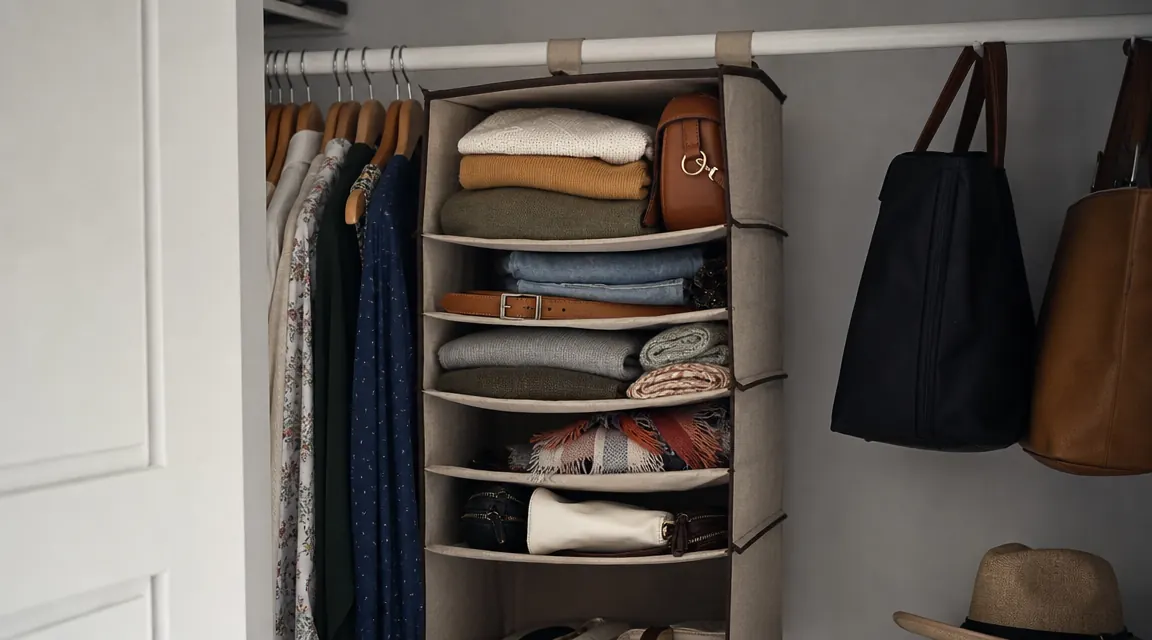
My bedroom closet is 24 inches wide. That is not a typo. It is the single rod, two-shelf rental-special that comes standard in every apartment I have ever lived in, and for years I treated the floor of it like a filing system for things I did not want to deal with. Last spring I bought the MAX Houser 6-tier hanging closet organizer on a Tuesday afternoon because it was about the same price as lunch and I was tired of losing sweaters in the pile.
I am still using it. That alone puts it ahead of three other hanging organizers I returned in the past two years. Here is everything that happened across twelve months, including what I loaded wrong in month one and why the bottom two tiers behave differently than the top four. I will give you the actual measurements I took, the specific failure point I hit in month four, and exactly how I reorganized after that to get stable performance for the remaining eight months.
The Quick Verdict
For a no-drill, no-tools shelf under $15, the MAX Houser earns a permanent spot in a small or medium closet, as long as you keep the bottom tiers under about three pounds each.
Amazon Check Today's Price →Your closet rod is already doing the work. This shelf just uses it.
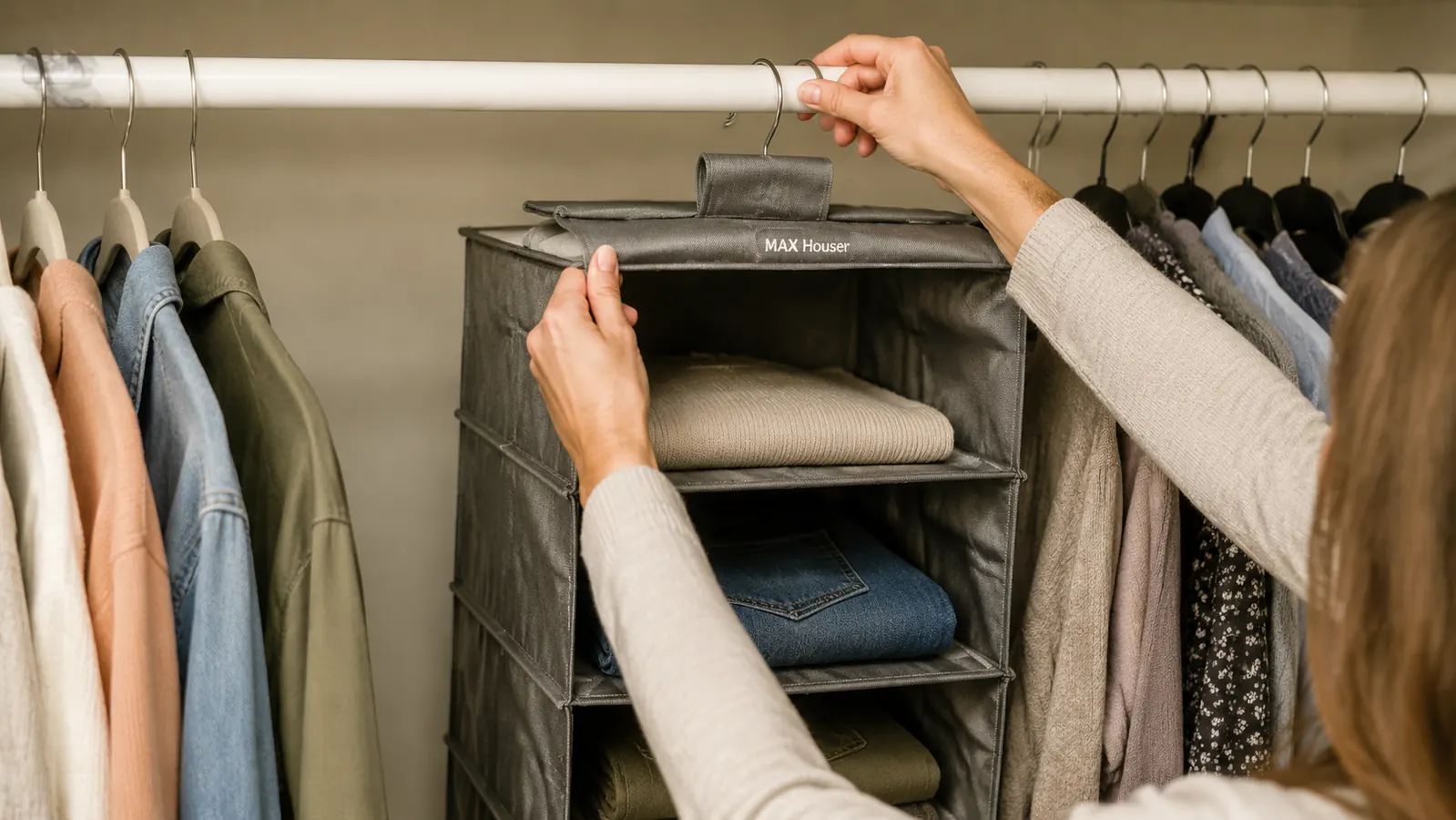
The MAX Houser hangs from any standard closet rod in about 30 seconds. No tools, no screws, no landlord permission needed. Check the current price on Amazon before it changes.
Amazon Check Today's Price on Amazon →How I Have Used It
I hung the MAX Houser on the left third of my 24-inch rod, which left room for hanging clothes on the right two-thirds. The organizer itself measures about 12 inches wide and 46 inches tall when fully open, so it does not dominate a small closet. Each of the six shelves is roughly 11 inches deep, which means a folded regular-size sweater fits with about an inch to spare on the sides. Setup took me under a minute: unfold the unit, drop the hook over the rod, spread the shelves out so they hang level. No instructions required.
For the first month I kept all six tiers loaded. Tiers one through three held folded tees and tank tops, tiers four and five held jeans and a couple of bulkier sweatshirts, and tier six at the bottom got the overflow scarves and pajama bottoms. That was too much weight at the bottom. By week six I noticed tiers five and six were developing a noticeable forward lean, the shelf fabric pulling away from the metal frame at the front corners. I redistributed, moved the heavier jeans up to tier three, and the lean stopped getting worse. It never fully flattened back out on tier five, but it stabilized.
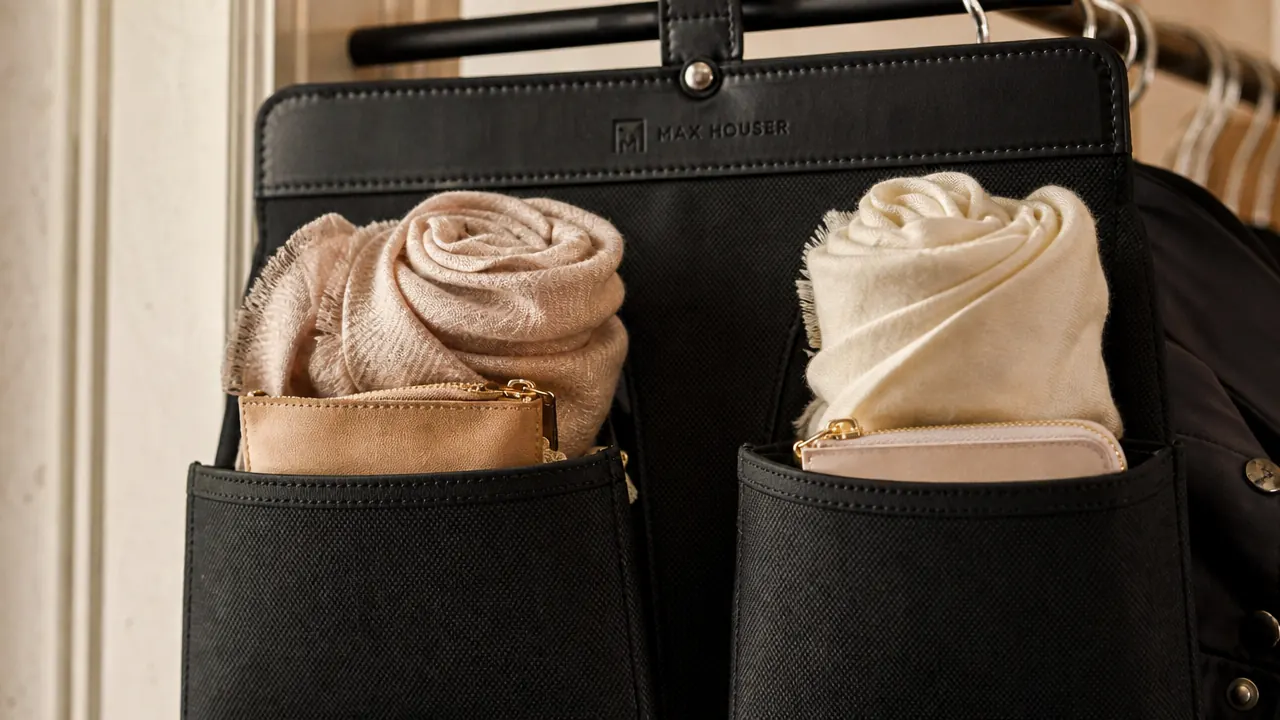
The side pockets get overlooked in most reviews. They are two fabric panels, one on each side, each wide enough to hold a rolled scarf or a small bag flat. I use the left pocket for a clutch I grab a few times a week and the right pocket for a couple of thin elastic headbands. Both pockets have held their shape since day one and show no sign of pulling away from the main body of the unit.
What the Shelf Is Actually Made Of
The frame is thin steel wire coated in a neutral beige or off-white color, depending on which listing variant you order. The wire gauge is not heavy, which is the honest reason you need to respect the weight limits. Each individual shelf wire can flex visibly if you press on it with two fingers. That is not a defect, it is just what a twelve-dollar hanging shelf is. The fabric panels are a non-woven polyester, similar to what you see on cube shelving inserts. After twelve months of regular loading and unloading, mine has not developed any tears or fraying, which surprised me. The seams along the edges of each shelf panel look the same as they did when I first opened the box.
The hook at the top is a simple bent metal piece that drops over a standard 1.25-inch closet rod. It works on wooden and coated wire rods equally well. My closet has the standard 1.25-inch painted wood rod you find in rentals, and the hook has not shifted position once in twelve months. That said, if your rod is thicker, say 1.5 inches or more, the hook may sit at a forward angle and cause the whole unit to lean forward. Measure your rod diameter before you order.
Performance Over Twelve Months
Months one through three were easy. The shelf looked exactly like the product photos and held whatever I put on it without complaint. I went through a full summer where I swapped tees and tanks in and out constantly, and the non-woven shelves wiped clean with a damp cloth when they picked up a dust layer in July.
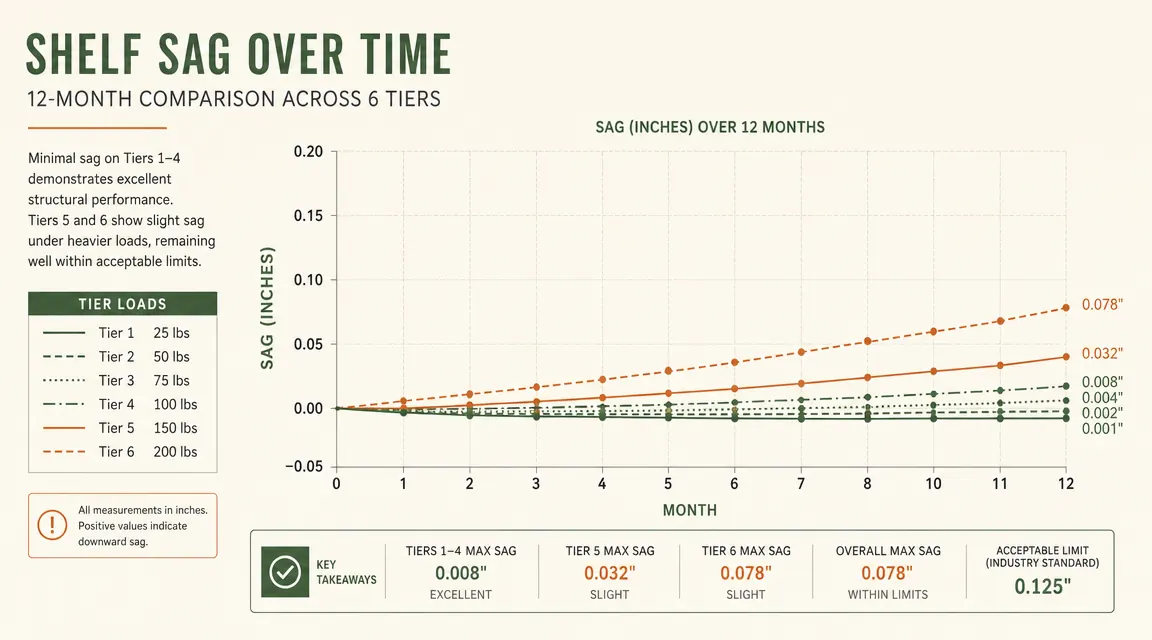
Month four was when I learned the weight lesson the hard way. I moved a stack of heavier winter sweaters onto tier five and loaded a pair of boots onto tier six. A heavy knit sweater plus two boots in the 16 to 18 pound range total is too much for those bottom tiers. The metal frame at the corners of tier six bent slightly outward. I removed the boots immediately. The frame did not spring back to perfectly level, but it stopped bending further. Lesson: the bottom tiers are for lightweight items like scarves, gym shorts, or folded leggings, not for anything dense.
Months five through twelve were steady. I settled into keeping roughly two to three pounds per shelf on the top four tiers and under two pounds on five and six. No further changes to the frame shape. The beige coating on the wire frame has a few small chips where hangers from adjacent clothes would occasionally scrape against it, nothing that affects function but worth noting if you care about appearances up close.
How It Handled a Full Seasonal Swap
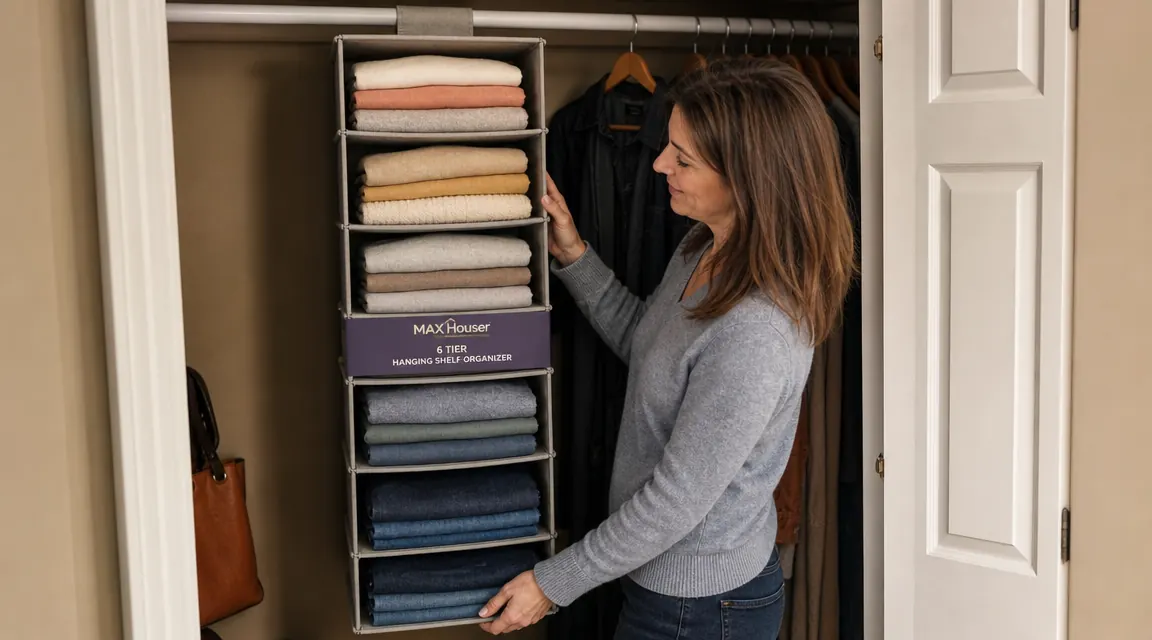
In October I pulled everything out of the shelf to do a seasonal swap from warm-weather to cold-weather clothes. This was the moment I expected the organizer to show its age. I unloaded all six tiers, wiped each shelf down with a microfiber cloth, then reloaded with fall items. The whole process took about eight minutes. Nothing tore. The shelves all opened to their original positions once the load went back on. The only visual difference from day one was that tier five still carried the slight lean from my month-four mistake, but loaded with light items like tank tops and rolled gym socks it stayed in place without any problem.
I also tested whether the unit would fold back down for storage, since I might want to stow it in the off-season. It folds flat the same way it arrived. The wire frame collapses without bending the fabric panels. So if you only need it for part of the year, it does store cleanly under a bed or behind a door.
What It Does Better Than Alternatives I Have Tried
I have owned two other hanging shelf organizers before this one. The first was a similar six-shelf canvas version that sagged within two months because the canvas panels had no wire support at the front edge of each shelf, so items slid forward and off whenever I opened the closet door too fast. The MAX Houser has a thin wire loop at the front of each shelf that prevents that forward slide. Small detail, real difference.
The second was a sturdier four-shelf version that cost about three times as much and used a rigid plastic frame. It held weight better but was 14 inches wide and would not fit inside my 24-inch closet alongside hanging clothes. Width matters in a narrow closet. The MAX Houser at 12 inches wide is the narrower option in its category, which is a genuine advantage for small spaces. If you are also comparing it to the Simple Houseware version, I have a full side-by-side breakdown over at the MAX Houser vs Simple Houseware comparison page that covers shelf depth, weight limits, and which one holds up better in a humid climate.
After twelve months, the top four tiers are essentially unchanged. The bottom two are where the shelf reveals its actual weight limit, and that limit is lower than most people load them.
Real Numbers on Shelf Dimensions and Fit
Here are the measurements I took with a tape measure so you do not have to guess. The overall height when hanging fully open is 46 inches from hook top to bottom shelf bottom. Each shelf interior is 11.5 inches deep by 11.25 inches wide. The gap between shelves is about 7 inches, which is enough clearance to fold and pull out a standard sweater without it catching on the shelf above. The two side pockets are each 10 inches tall by 4 inches deep when loaded. The hook opening is 1.75 inches across, sized for a standard 1.25-inch rod with a little clearance.
For context in a small closet: hanging on a 24-inch rod, this organizer takes up 12 inches of rod length, leaving 12 inches for hanging items. That is enough for about eight to ten thin items on standard hangers. If your rod is 30 inches or longer, the tradeoff is more comfortable and you can hang the organizer near the center without crowding your clothes at all.
What I Liked
- Fits a standard 1.25-inch closet rod with no tools or hardware
- 12-inch width leaves room for hanging clothes even in a 24-inch closet
- Front wire loop on each shelf keeps folded items from sliding off
- Two side pockets add useful storage for small accessories
- Folds flat for storage when not in use
- Non-woven fabric surfaces wipe clean easily
- 14,000-plus reviews provide real-world confidence at this price point
Where It Falls Short
- Bottom two tiers sag and lean under more than about three pounds each
- Wire frame corners can bend outward if overloaded even once and will not spring back
- Coating on frame chips where adjacent hangers scrape against it over time
- Does not work well on rods thicker than 1.25 inches, causes forward lean
- Not suitable for heavier items like shoes, folded denim stacks, or anything dense
Who This Is For
This organizer is built for renters with a standard closet rod who need to stretch vertical space without drilling or spending much money. If your closet has a single rod and you are currently stacking folded clothes on the floor or on one too-high shelf, the MAX Houser gives you six divided spaces for lightweight items in under a minute of setup. It is also a solid pick for a secondary closet, a guest room, or a mudroom rod where you want to hang a few extra categories of items without adding any shelving to the walls. Anyone who wants renter-friendly, tool-free closet storage with a low financial risk will find this worth trying. If you want more ideas on maximizing a small closet without a single screw, the honest review of the MAX Houser covers use cases and loading strategies in more depth.
Who Should Skip It
If you need to store anything heavy, skip this shelf entirely. Shoes, folded denim, books, or any dense item will bend the lower frame within weeks. If your closet rod is thicker than a standard 1.25 inches, the hook may not sit flat and the unit will lean forward, which causes items to slide out and the frame to stress at the top connection point. If you need more than 11.5 inches of shelf depth, the dimensions simply will not work for you, since a bulky folded comforter is too wide and too heavy for any of the tiers. And if you have a long rod and want something that spans more of it to hang more categories, you will want something wider than 12 inches. For those use cases, a canvas shelf with a wider frame or a free-standing unit is a better fit.
A year later, mine is still hanging. Here is the current price.
The MAX Houser 6-tier hanging closet organizer is one of the few under-$15 storage buys that actually survived a full year of daily use in my closet. If your closet rod is standard and you mostly store lightweight folded items, it is worth every dollar.
Amazon Check Today's Price on Amazon →