
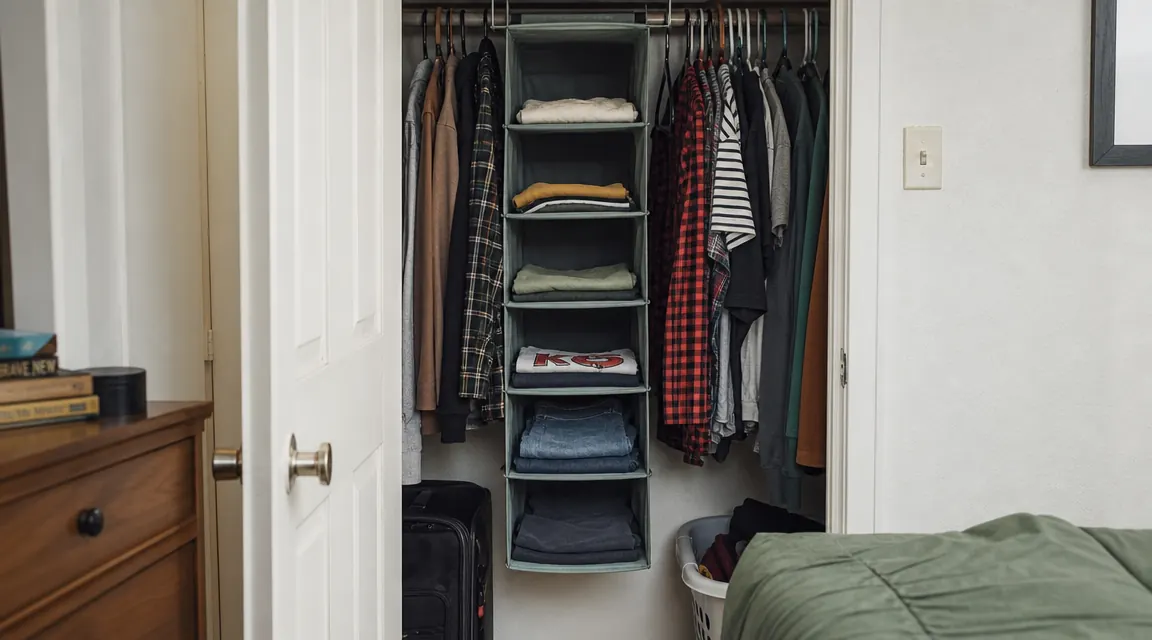
If you rent an apartment with a single closet rod and maybe 30 inches of hanging space, you already know the problem. Everything ends up in a pile. Folded clothes get shoved to one end, then fall off the shelf, then live on the floor. Jeans go on the rod. Then sweaters go on the rod. Then nothing fits right and the whole system collapses by Thursday. I have reorganized this exact closet in four different apartments, and the thing that finally made it stick was not a new dresser or a custom built-in. It was a $12 hanging shelf that clips onto the rod in about two minutes.
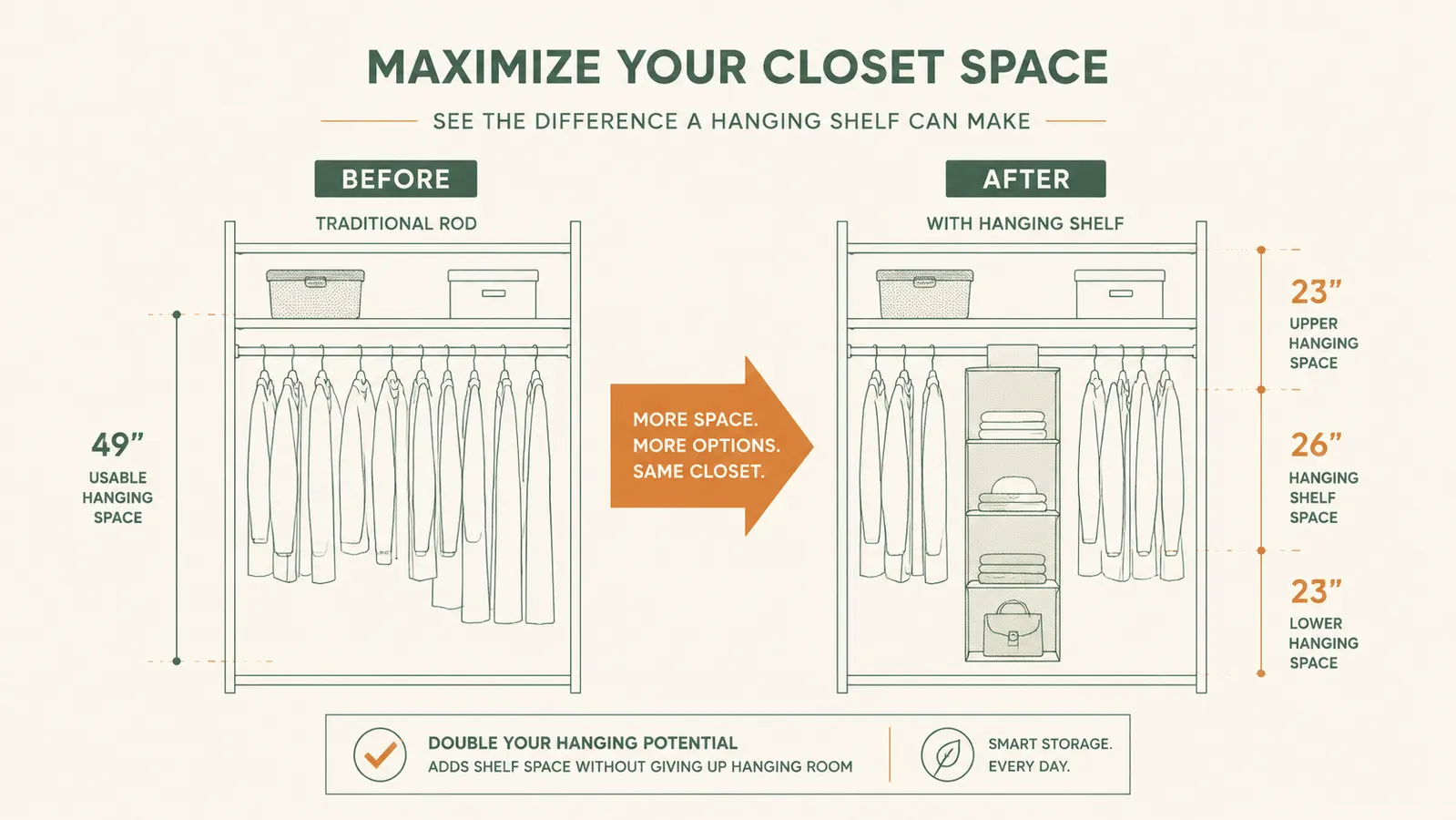
A small closet does not need more furniture. It needs better use of the vertical space that is already there. The rod in most standard apartment closets sits 66 to 70 inches off the floor, which leaves two to three feet of dead air below the hem of your shirts. A hanging shelf fills that gap without touching a single wall. No drilling, no hardware, no asking the landlord. This guide walks you through exactly how to set it up, what to put where, and a few habits that keep it working past the first week.
If your closet rod is doing all the work, this $12 shelf takes half the load
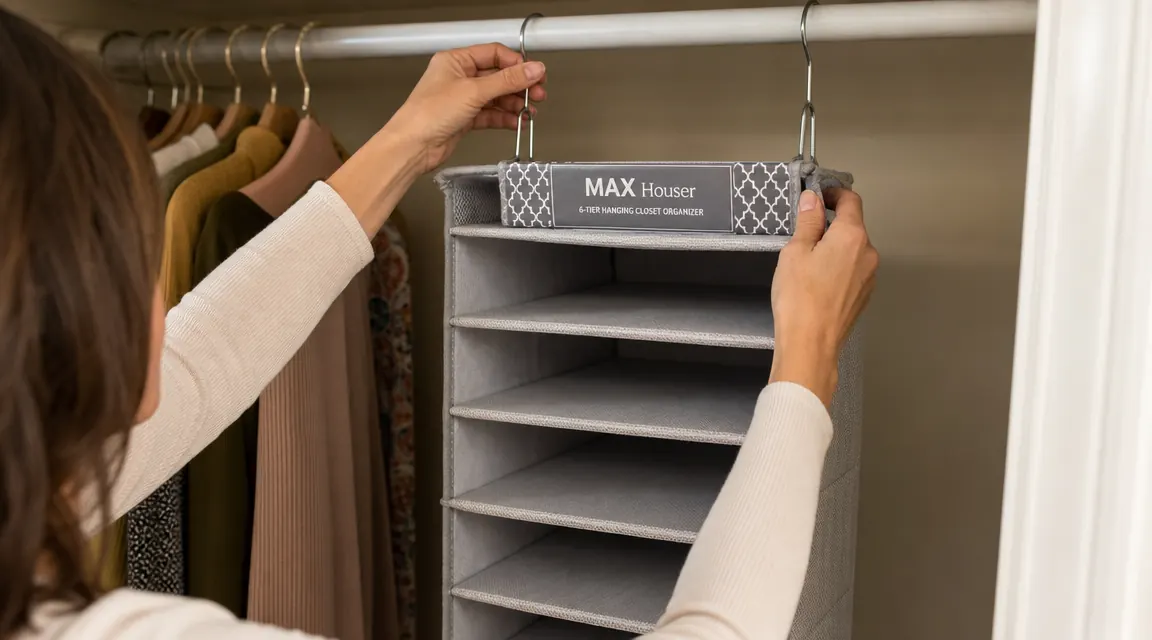
The MAX Houser 6-Tier Hanging Closet Organizer clips directly onto your rod, adds six shelves below your hanging clothes, and folds flat when you move. Over 14,000 reviews, and it costs less than a takeout meal. Check the current price before you read another word.
Amazon Check Today's Price on Amazon →Step 1: Pull Everything Out of the Closet
Before you hang anything, empty the closet completely. Put everything on the bed or the floor in the next room. Yes, all of it, including the stuff shoved in the back corner you have been ignoring. This is not optional. If you hang a shelf and then try to work around what is already in there, you end up with an organized shelf and a pile of junk around it. The full reset takes ten minutes and it is the only way to make real decisions about what stays.
While the closet is empty, look at the rod height. Measure from the rod to the floor. Most apartment rods are between 64 and 72 inches up. If your rod is under 60 inches, a 6-tier hanging shelf will likely graze the floor, which affects how the bottom shelf sits. In that case, use 4 tiers or fold the bottom two up. If you have a double-rod closet, the lower rod is usually around 40 inches high. A 6-tier shelf can still work there, but it will be more compact. Write down your rod height before you order anything.
Also take note of your rod diameter. Most closet rods are 1.25 inches in diameter. The MAX Houser shelf clips fit rods up to 1.5 inches, which covers almost every standard apartment and builder-grade closet. If you have an unusually thick custom rod (some older homes have 2-inch wooden dowels), check before you buy. Most fabric hanging shelves are designed for the standard size.
Step 2: Sort What Comes Back In
With the closet empty, sort what came out into three groups. First, things that hang: dresses, button-downs, jackets, anything that gets wrinkled if folded. Second, things that fold: jeans, sweaters, t-shirts, workout clothes, sleep clothes. Third, things that neither hang nor fold well: shoes, bags, belts, hats, small accessories. Most people try to hang everything. That is why the rod is always full and still feels chaotic. The hanging shelf handles group two. Group three gets its own system, which we cover in Step 5.
Be strict with group one. If you are hanging something out of habit but you could fold it fine, move it to the fold pile. A small closet cannot afford wasted rod space. Every inch of rod you free up is an inch the hanging shelf can use to grow downward. The more you shift to folded storage on the shelf, the more breathing room your hanging clothes get, which also means fewer wrinkles because they are not packed against each other.
This sorting step is also the right time to let things go. A closet that is still holding three sizes of jeans and a jacket from 2019 is not a storage problem. It is a decisions-not-made problem. You do not need a lot of space. You need the right items in the space you have. I keep a small bag near the closet door during this phase so anything that does not belong goes straight into it rather than back onto the pile. That bag leaves the apartment the same day.
Step 3: Hang the Shelf and Set Your Zones
Clip the MAX Houser shelf onto the rod at one end of the closet. The two metal clips open and close around the rod, and the shelf hangs freely below. It takes about 90 seconds. No tools. No holes. The shelf itself is 11.4 inches wide and the tiers are about 4.5 inches tall, so the full 6-tier unit drops roughly 28 inches below the rod. At a standard 66-inch rod height, the bottom shelf sits around 38 inches off the floor, which leaves plenty of clearance.
Once it is hanging, assign each tier a job before you put a single item on it. Do not just start loading from the top. Think about how often you reach for things. Daily items go in the middle tiers, at eye level or slightly below. Items you use less often go at the top. The bottom tier is for things you grab by bending down anyway, like workout shoes or a bag you use once a week. Writing this out on a sticky note for the first week or two helps the habit stick.
The two side pockets on the MAX Houser are a bonus most people underuse. Each pocket is about 6 inches deep and 5 inches wide. They are useful for belts, rolled-up scarves, charging cables you keep near the dresser, or small accessories you would otherwise pile on a shelf. Keeping the shelves themselves for flat-folded items and using the pockets for loose items is the combination that keeps the shelf looking neat a month later.
Step 4: Load the Shelf Using the Fold-and-Stack Method
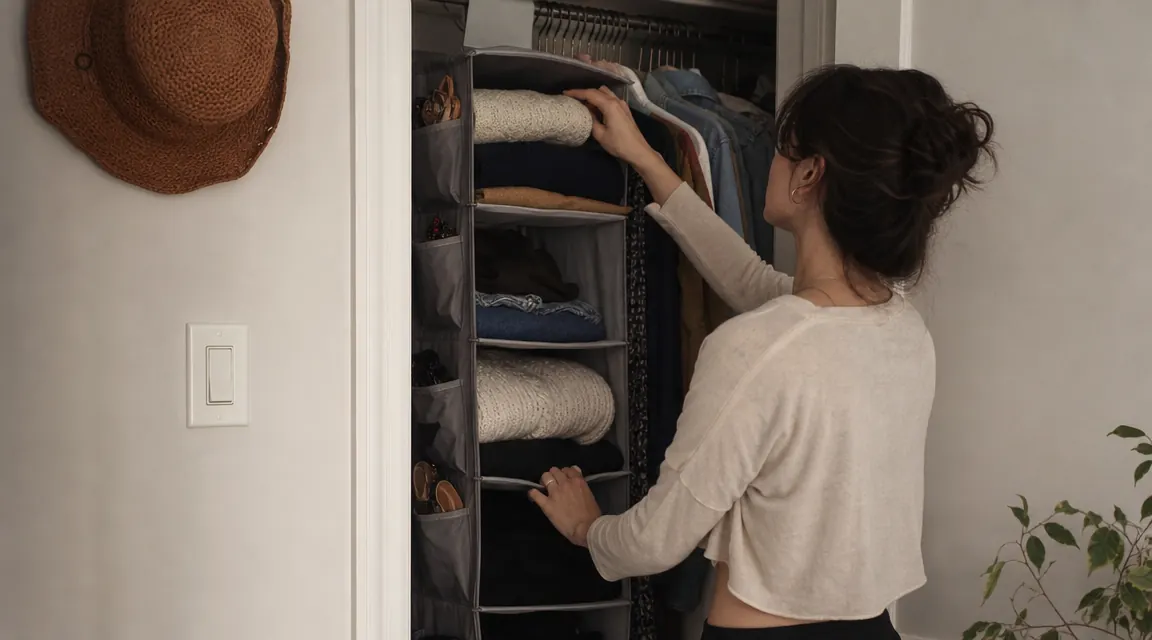
The fold-and-stack method is simple: fold everything to the same width as the shelf, about 10 to 11 inches, then stack like items together on a tier, flat side forward. Jeans folded to 11 inches stack cleanly and you can see the waistband of each pair from the front. T-shirts folded the same way do the same thing. This is not a Marie Kondo lecture. It is just geometry. When everything is the same width as the shelf, nothing tips sideways and nothing falls when you pull one item out.
A common mistake is mixing categories on a single tier. Sweaters on the same shelf as jeans means the stack heights are different and the whole tier looks messy within a week. Keep one category per tier. If you have more of a category than one tier can hold, use the next tier down for overflow of the same type rather than mixing. The visual consistency of single-category tiers is what makes the shelf look organized rather than just slightly less chaotic than the floor.
Check the load weight as you go. The MAX Houser is designed for soft goods like folded clothes, not heavy items like stacked books or a pile of shoes. I have had three of these shelves across different closets and none of them have sagged or collapsed under a full load of clothes. The canvas holds its shape well. The problem only shows up if you try to use a fabric hanging shelf for things it was not meant to carry, like dense denim stacked eight pairs deep or heavy winter coats folded flat. Stick to soft, foldable items and the shelf will hold its shape for a long time.
The closet did not need more space. It needed a second layer of storage in the space that was already there. The hanging shelf gave me that without touching a wall.
Step 5: Handle Shoes, Bags, and the Floor
The hanging shelf handles folded clothes. Now deal with the floor and the non-folded items. For shoes in a small closet, the floor directly below the hanging section of the rod, the area the shelf does not cover, is the right place. Keep it to the pairs you wear most often, lined up heel to heel. A flat shoe rack that holds six to eight pairs takes up about 24 inches of floor width and keeps them from sprawling. You do not need a $60 shoe cabinet. A $15 two-tier rack works fine for a small closet.
Bags are the most common closet-floor offender. If a bag has a handle or a strap, it can hang on the rod alongside your clothes. Group all your bags on one end of the rod using S-hooks or just looping straps directly over the rod. A tote bag, a crossbody, a gym bag, and a weekend bag can all hang in about 18 inches of rod space. That is a lot better than four bags stacked on the floor competing with your shoes for the same 12 square inches.
Hats and accessories that do not fit the shelf pockets can go in a small bin on the top shelf of the closet, if your closet has one. If it does not, a hanging hat organizer or an over-the-door hook strip handles them without using any of the rod or shelf space you just freed up. The goal at this stage is to make sure every category of item has a fixed address in the closet, not just a general area. When everything has a specific spot, putting things away takes five seconds instead of a small decision every time.
What Else Helps
Once the hanging shelf is in and the closet has its zones, a few small additions make a real difference. Slim velvet hangers instead of the thick plastic ones your dry cleaning came on will immediately give you three to four inches of extra rod space in a standard closet. That is not a small number when you are working with 30 inches total. A second bar caddy that hooks over the rod at the opposite end from the hanging shelf gives you a shorter hanging zone for folded-collar shirts or work clothes. And a small command hook on the inside of the closet door is the right place for tomorrow's outfit or a bag you use every day, so it never ends up on the floor by the door. None of these cost more than $10. None require a drill. And none of them do anything unless the hanging shelf is already doing the heavy lifting for your folded clothes, which is why that is the first step and not the last. If you want a longer look at how the MAX Houser shelf has held up over real daily use, the full review at MAX Houser Hanging Closet Organizer Review: One Year in a Tiny Bedroom Closet covers what held, what sagged, and what I would do differently. And if you want a more pointed take on the tradeoffs, MAX Houser Closet Organizer: An Honest Review After the Hype gets into the specifics most people skip.
The closet you just read about starts with this shelf
The MAX Houser 6-Tier Hanging Closet Organizer is what makes this system work. It clips on your rod, holds your folded clothes, and frees up the floor and the rod for everything else. It folds flat when you are done and costs less than most of the things you have already tried. Check the current price and grab it before the next closet-reset attempt stalls out.
Amazon Check Today's Price on Amazon →